
In B2B, complexity is a given
Most B2B organisations operate in complex environments, where they deal with:
- Long sales cycles
- Technical or scientific products
- Different audiences with different priorities
- Regulation and compliance
- Increasing pressure around sustainability
And this is normal. The problem starts when it shows up in communication because messages become longer, websites try to explain everything at once, and presentations grow slide after slide. And when that happens, brands don’t just become harder to understand, they become harder to choose.
Clarity starts with strategy, not design
One of the most common mistakes in brand strategy is jumping to design too quickly.
The visual work can feel like progress, but without strategy, it’s often disconnected.
Strategy is what creates alignment before anything is designed, and it helps answer fundamental questions such as:
- Who are we actually speaking to?
- What do they need to understand first?
- What makes us meaningfully different?
- What role should our brand play in their decision-making process?
This is where clarity is built. Everything else follows.
How storytelling helps
In B2B, storytelling isn’t just about big emotional claims or catchy slogans. It’s about understanding the audience and considered structure.
- Decide what really matters,
- Connect technical detail to real-world impact,
- Create a clear narrative that works across audiences,
- And stay consistent without sounding repetitive.
Good storytelling in B2B is less about persuasion and more about precision
We use design as a tool for understanding
Design is not just about how things look; it’s about how they are understood.
In complex B2B industries, good design is how intent travels, gaining attention and making messages easier to absorb. When strategy and storytelling are clear, design becomes a powerful tool to support understanding rather than adding noise. At its best, design becomes a system for decision-making, not decoration.
Everything says something
In B2B branding and communication, every moment of engagement, every word, every visual and every layout choice sends a message. When brands lack clarity, those messages become fragmented. But when brands are clear about what they stand for and what they need to communicate, their message feels confident because it is considered and intentional.

Clarity as a long-term advantage
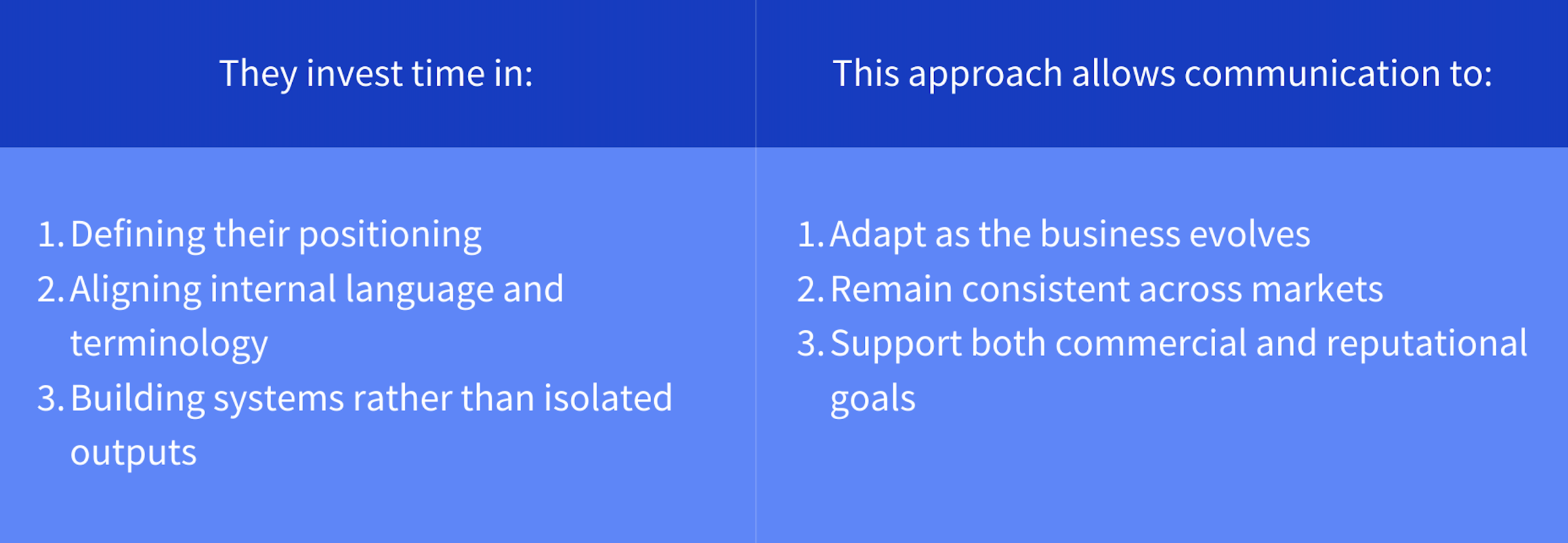
The strongest B2B brands don’t treat clarity as a one-off exercise. Building systems rather than isolated outputs is what allows brands to scale without losing clarity.
Our final thoughts
At Threesixty, we believe that when strategy, storytelling and design work together, brands don’t just look better, they come alive.
For B2B brands operating in food ingredients, agribusiness and sustainability, clarity creates confidence internally and externally. It allows organisations to communicate complex ideas without creating confusion and to build trust over time.
If your strategy only lives in documents or presentations, it isn’t doing its job yet. Look at where it actually shows up: on your website, in everyday communication, social media, in your sales material,… That’s where clarity either holds or starts to break down.
And in B2B, that makes a real difference.
Got a project in mind? Let’s talk.